

If you’ve spent any time operating excavators, you know that switching between excavator attachments the old way (hammering pins in and out) is time-consuming, physically demanding, and frankly, a pain. Quick hitches have changed the game by making attachment changes faster and safer, but not all hitches work the same way. Understanding the differences between pull pin and manual hitch systems can help you choose the right setup for your machine and workflow.
At Hogan Engineering, we manufacture both pull-pin and manual hitches designe d specifically for Australian conditions and operators. Whether you’re running a 1.5-tonne mini excavator or a 6.5-tonne machine, choosing the right hitch type affects your productivity, safety, and how smoothly your day runs on site.
Let’s break down what separates these two hitch types and when each one makes the most sense for your operation.
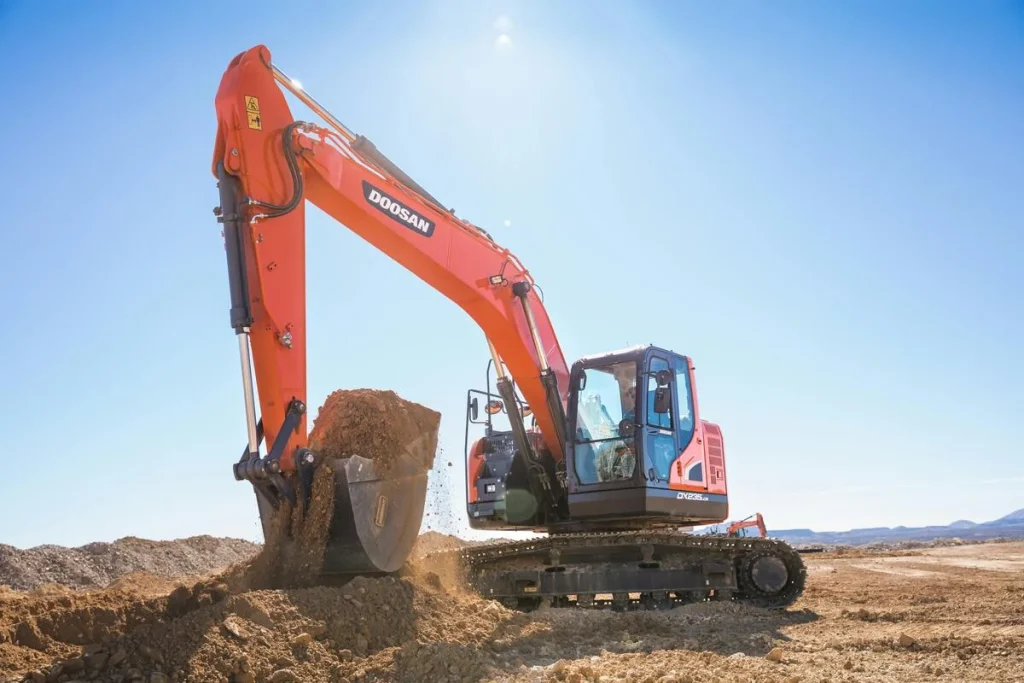
The Role of Hitches in Excavator Performance
The right excavator hitch does more than just hold your bucket in place. It’s the critical connection point that determines how quickly you can adapt to different tasks, how safely your attachments stay secured during operation, and ultimately, how much productive work you can get done in a day.
When you’re switching between a digging bucket, a grading bucket, and a grab multiple times throughout a shift, every minute spent changing attachments adds up. Traditional pin-on systems can take 15 to 30 minutes per change when you factor in accessing the pins, lining everything up, and securing the attachment properly. That’s time your machine isn’t working, and on a busy site, that downtime translates directly into lost productivity and revenue.
Quick hitches (whether pull pin or manual) reduce attachment change time to just a few minutes while improving safety by eliminating the need to hammer pins in and out. But the efficiency gains only materialise when you’re using the right hitch type for your specific operation. A hitch that doesn’t match your workflow or machine specifications can create its own problems, from compatibility issues to safety concerns.
Our range of excavator hitches is designed with Australian operators in mind, offering both pull pin and manual options across tonnage ranges from 1.5 to 6.5 tonnes, plus specialised backhoe hitches. Each hitch is CNC-machined to ensure precise pin centre alignment, which is critical for safe, reliable attachment connection.
What Are Quick Hitches? Understanding the Different Types
Before diving into the specific types, it’s worth understanding what quick hitches actually do and why they’ve become standard equipment on many excavators.
A quick hitch, also called a quick coupler, is a mechanical device that mounts to your excavator’s dipper arm and allows you to connect and disconnect buckets and other attachments without manually driving pins in and out with a hammer. The hitch sits on the end of your machine’s arm and uses a locking mechanism to grab onto the pins on your attachments, creating a secure connection that’s faster and safer than traditional methods.
Operators use quick hitches because they dramatically reduce the physical labour and time involved in attachment changes. Instead of climbing out of the cab multiple times, accessing pins that are often stuck or corroded, and hammering them into alignment, you’re working with a purpose-built system designed for quick, repeatable attachment swaps.
The two most common types of quick hitches for smaller excavators are pull-pin hitches and manual hitches. Both require the operator to exit the cab (unlike fully hydraulic quick hitch systems), but they offer different mechanisms for securing attachments and suit different operational needs. There are many different types of quick hitches available on the market, but pull pin and manual hitches represent the most practical options for operators who want reliable performance without the complexity of hydraulic systems.
Pull Pin Hitches: Speed and Simplicity
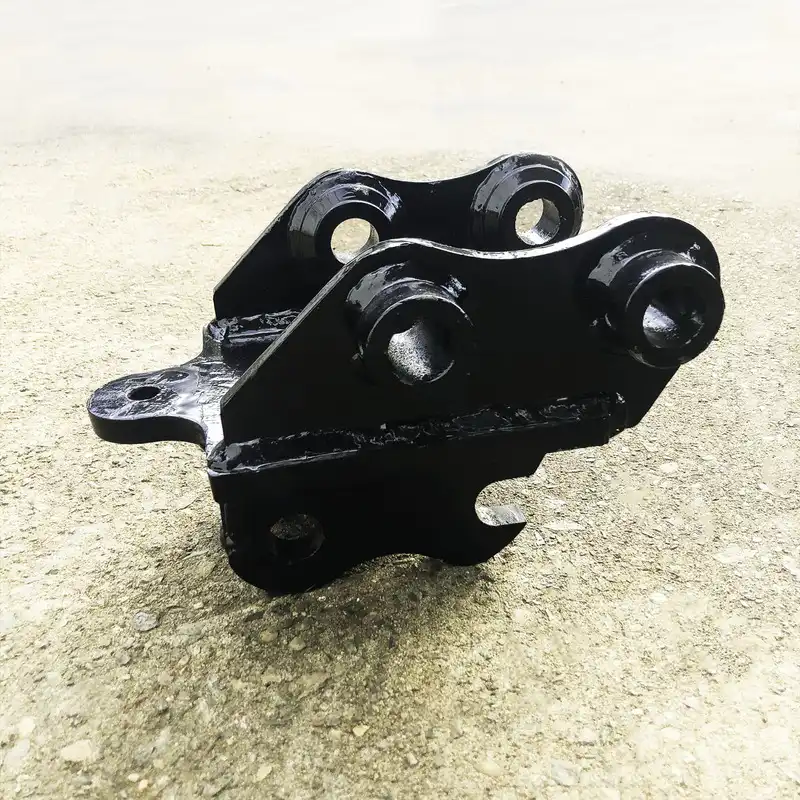
A pull-pin hitch utilises a spring-loaded latch system, combined with a master pin, to secure attachments. The hitch mounts permanently to your excavator’s dipper arm. When you need to pick up an attachment, you drive the excavator so the hitch approaches the attachment sitting on the ground. As you position the hitch over the attachment’s pins, the spring-loaded latch engages and clamps around them, creating the initial connection.
To secure it, exit the cab and insert a master pin through the hitch. This pin prevents the latch from accidentally opening during operation. The master pin provides a clear, visual confirmation that the attachment is secured. If the pin won’t insert, you know immediately that the latch isn’t fully closed and the attachment isn’t safe to use.
To release an attachment, you remove the master pin and use a lever bar to open the spring-loaded latch. The lever compresses the spring, allowing the latch to open and release the attachment’s rear pin. You then curl the excavator arm away to disengage the front hook from the front pin.
The key advantage of pull pin hitches is their speed and ease of use. The spring mechanism assists with engaging and releasing the latch. Once the attachment is positioned correctly, the latch naturally closes around it with minimal effort. For operators who need to change attachments several times throughout a shift, this speed advantage adds up significantly.
Pull pin hitches are known for their reliability. The spring mechanism is relatively simple, with fewer moving parts than some other systems, which means less that can go wrong. These hitches work particularly well in operations where attachment changes are frequent but not constant. If you’re switching between a digging bucket, a grading bucket, and a grab a few times a day, the pull pin system gives you quick changes without the complexity or cost of hydraulic systems.
We manufacture pull-pin hitches for a range of machine sizes, including a 1.5-tonne range pull-pin hitch, a 2.5-tonne range pull-pin hitch, a 3.5-tonne range pull-pin hitch, and a backhoe range pull-pin hitch. Each is built with strong, durable construction designed to withstand normal working conditions while maintaining the precise tolerances needed for safe attachment connection.
Manual Hitches: Proven Durability
Manual hitches work on a similar principle to pull pin hitches but use different locking mechanisms. Like pull pin hitches, they mount to your excavator’s dipper arm and require you to drive the machine to position the hitch over the attachment on the ground. However, manual coupler systems may use different mechanisms to engage and secure the latch, such as screw threads or alternative mechanical lever arrangements that rely on manual operation.
The latch engages with the attachment’s pins, and you then secure it with a safety pin to prevent accidental release. The exact operation varies depending on the specific manual hitch design, but all require the operator to exit the cab to complete the securing process, eliminating the need for manual labour with hammers and driving pins.
The primary benefit of manual hitches is their straightforward, robust design. Manual hitches offer a proven, durable solution that many operators trust for long-term reliability. The mechanical locking systems are designed to be inspected visually, so you can verify that everything is properly secured before starting work.
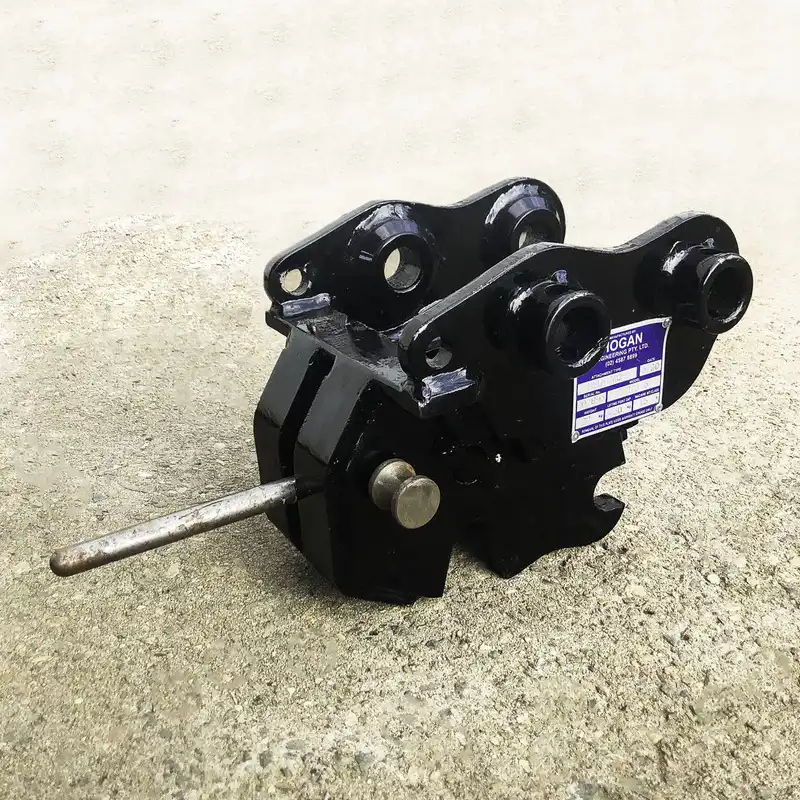
Manual hitches shine in applications where the attachment change process follows a regular, predictable pattern. If you’re typically using the same attachment for extended periods, then switching to another attachment for a different phase of work, the connection process isn’t a disadvantage. The durability and simplicity of the system become the priority.
These hitches are also excellent choices for operations where multiple operators use the same machine. The straightforward operation means training new operators is simpler, and the visual inspection of the locking mechanism makes it easy for supervisors to verify that attachments are secured correctly.
Our manual hitch range is more extensive than our pull pin offerings, covering machines from 1.5 tonnes right through to 6.5 tonnes. This wider range reflects the versatility of manual hitch systems across different machine sizes and applications. Each manual hitch is fitted with a safety pin and manufactured to suit your specific machine specifications.
Hitch Specifications and Safety
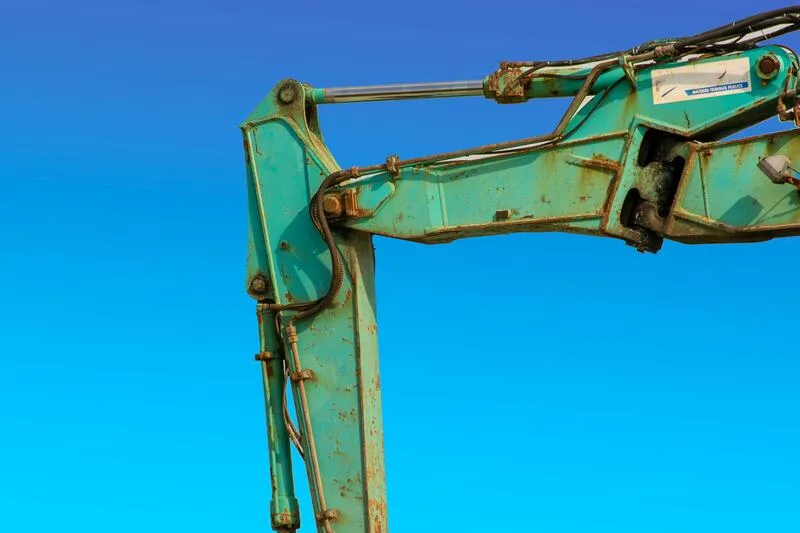
Regardless of which hitch type you choose, understanding the critical specifications is essential for safe operation. The three key measurements that determine hitch compatibility are pin centres, pin diameter, and spacing.
Critical Measurements for Compatibility
Pin Centres
Pin centres refer to the distance between the centres of the two mounting points on your excavator’s dipper arm. This measurement must match exactly between your machine, your hitch, and your attachments. Even a few millimetres difference can prevent proper connection or create dangerous stress points during operation.
Pin Diameter
Pin diameter is the thickness of the pins themselves, measured in millimetres. Your hitch must accommodate the pin diameter used by your attachments. Different manufacturers use different sizes, which is why precise measurements are critical. Using pins that are too small allows excessive movement and wear, while pins that are too large simply won’t fit.
Spacing
Spacing, sometimes called ear width, is the distance between the mounting ears at their narrowest point. This determines whether an attachment will physically fit into the hitch opening. Getting this wrong means attachments that should theoretically work with your machine won’t actually connect. If you’re unsure about how to measure excavator pins or any of the terminology related to them, be sure to read our guide, Excavator Bucket Pins Explained.
Manufacturing Precision Matters
We use CNC machining to manufacture pin centres with precise tolerances, ensuring perfect positioning every time. This precision is critical because misaligned pin centres can prevent hitches from engaging properly or create uneven load distribution that accelerates wear and increases the risk of failure.
Safety Requirements and Secondary Locking
Safety requirements for quick hitches are stringent, and for good reason. The locking mechanism must secure the attachment reliably under all operating conditions, from light grading work to heavy digging. Both pull pin and manual hitches incorporate safety pins or master pins that serve as secondary locking mechanisms. If the primary latch or mechanism fails, the pin prevents the attachment from detaching.
Maintenance Best Practices
Maintenance needs for hitches are relatively straightforward but critical. Regular inspection should include checking for wear on pins, examining the latch mechanism for damage or deformation, and ensuring that safety pins move freely and aren’t corroded. Lubrication points should be greased according to manufacturer specifications, and any worn components should be replaced immediately rather than run until failure.
Visual Verification: Your Most Important Safety Check
The most important safety practice is visual verification before use. Never assume a hitch is properly engaged. Always perform a visual check that the locking mechanism is fully closed and the safety pin is properly inserted. Many accidents occur because operators skip this simple verification step.
Discover Hogan’s Range of Pull Pin and Manual Hitches
We manufacture excavator hitches designed specifically for Australian conditions and built to match the exact specifications of your machine. Our range covers the most common excavator sizes operating on Australian sites, with both pull-pin and manual options available. Whether you need to install a hitch on a compact mini excavator or a larger machine, we have options to suit various attachments and working conditions.
Pull-Pin Hitches
Our pull pin hitch range uses spring-loaded latch systems combined with master pins for fast, reliable attachment changes. Available across smaller to mid-size machines, these hitches are designed for operators who value speed and simplicity in their workflow.
- 1.5 Tonne Range Pull Pin Hitch
- 2.5 Tonne Range Pull Pin Hitch
- 3.5 Tonne Range Pull Pin Hitch
- Backhoe Range Pull Pin Hitch
Manual Hitches
Our manual hitch range offers proven durability and straightforward operation across the widest range of machine sizes. From compact mini excavators to larger earthmoving equipment, these hitches are built to deliver reliable performance in demanding Australian conditions.
- 1.5 Tonne Range Manual Hitch
- 2.5 Tonne Range Manual Hitch
- 3.5 Tonne Range Manual Hitch
- 5 Tonne Range Manual Hitch
- 5.5 Tonne Range Manual Hitch
- 6.5 Tonne Range Manual Hitch
All our hitches share several key features that set them apart from imported alternatives. We use strong, durable construction designed to withstand the demanding conditions of Australian worksites. Our CNC-machined pin centres ensure perfect positioning and alignment, which is critical for safe operation and minimising wear on both the hitch and your attachments.
Perhaps most importantly, we maintain a large library of machine data that allows us to mix and match pickups to suit your specific needs. This means if you’re running older machines, multiple brands, or have unique requirements, we can manufacture hitches that work with your exact specifications and accommodate the specific pin sizes and pin hole configurations required, rather than forcing you into generic solutions that might not fit properly. We also manufacture hitch pin components to exact tolerances for reliable, safe operation.
How to Choose the Right Hitch
The decision between a pull-pin hitch and a manual hitch largely comes down to your machine size and how often you’re changing attachments.
Machine Size is Your Primary Filter
Start here: if you’re operating a machine larger than 3.5 tonnes, your choice is straightforward. Our manual hitch range extends up to 6.5 tonnes, making it the go-to option for mid-size to larger excavators. Pull pin hitches are designed for smaller machines (up to 3.5 tonnes) and backhoe applications, where their lighter weight and compact design work best.
Attachment Change Frequency
For machines in the 1.5 to 3.5 tonne range where both options are available, consider your daily workflow. If you’re changing attachments five or more times per shift, the pull pin system’s spring-assisted latch and quick master pin operation will save you measurable time throughout the day. Those minutes add up fast when you’re switching between digging, grading, and grabbing multiple times daily.
If you’re typically running the same attachment for days at a time, or only switching once or twice per shift, either hitch type will serve you well. In these situations, the manual hitch’s proven durability and straightforward visual inspection might be the better choice.
Operating Environment Considerations
Some operators prefer manual systems in dirty or muddy conditions where they want the tactile feedback of physically verifying every connection. Others prioritise the efficiency of pull pin systems when working on tight schedules where every minute counts. Think about your typical job sites and what matters most to your operation.
Fleet Consistency
If you’re running multiple machines with different operators, choosing one hitch type across your fleet simplifies training and reduces the chance of operator error. This often outweighs any minor operational differences between the two systems.
Long-Term Value
Both hitch types are competitively priced, but consider the productivity gains over time. A hitch that saves even a few minutes per attachment change, multiplied by several changes per day over hundreds of working days, represents real cost savings that quickly offset the initial investment. For high-frequency users, the pull pin system’s time advantage becomes a measurable ROI. For operators who rarely change attachments, the durable simplicity of manual systems might offer better long-term value.
Key Takeaways for Excavator Operators
The fundamental difference between pull-pin and manual hitches comes down to the locking mechanism and operation speed. Pull-pin hitches utilise spring-loaded latches with master pins for quick and straightforward attachment changes. Manual hitches use alternative mechanical systems that may be slightly more involved but offer proven durability and straightforward operation.
Both hitch types require operators to exit the cab, making them distinct from hydraulic systems but significantly faster and safer than traditional pin-on attachments. Both types, when properly maintained and operated, provide a secure, reliable attachment connection that meets Australian safety standards.
Neither type is inherently better. The right choice depends on your specific operation, machine size, attachment change frequency, and operator preferences. What matters most is choosing a hitch that matches your machine specifications exactly and is manufactured to proper tolerances.
At Hogan Engineering, we’ve been manufacturing excavator attachments and hitches for Australian operators for decades. Our team understands the practical demands of real work sites and can provide expert advice on which hitch type and size best suits your specific application.
Explore our range of excavator hitches or contact us today to discuss your requirements with a member of our team. We can help you select the right hitch for your machine, verify compatibility with your existing attachments, and ensure you’re getting a solution that improves your productivity and safety on site.
